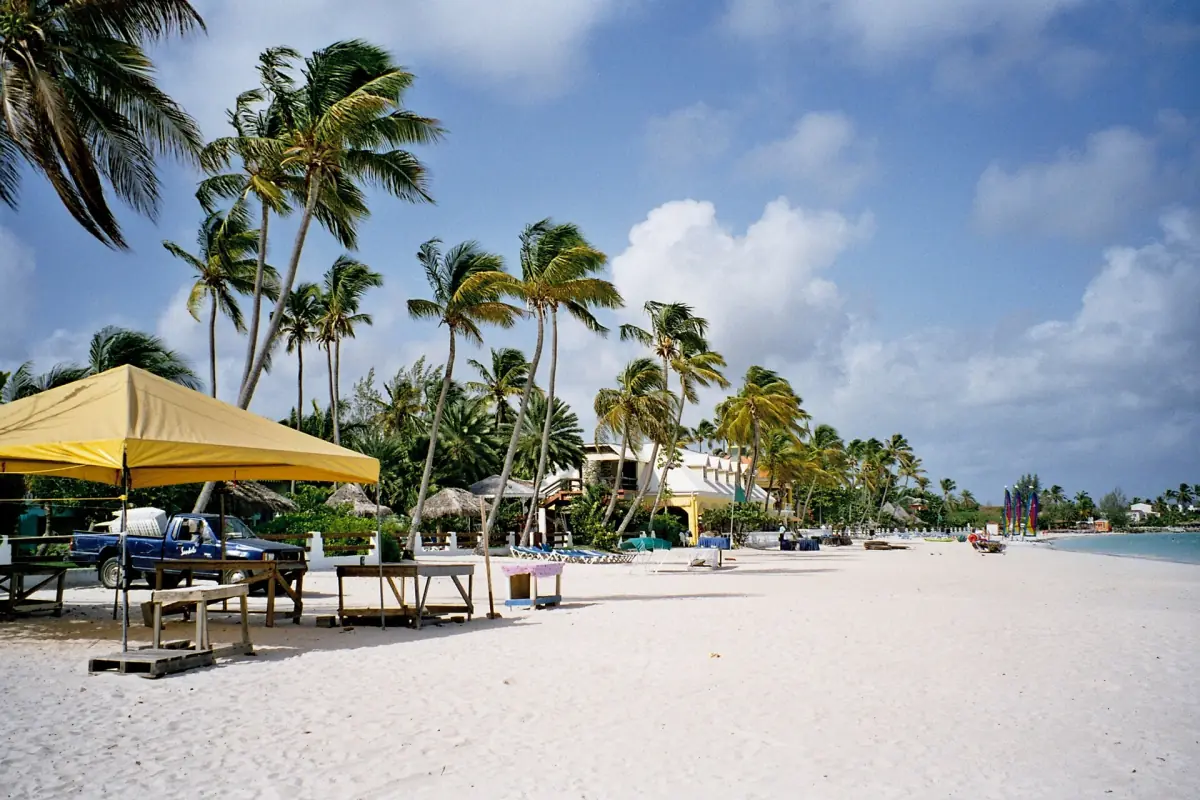
Antigua weather at a glance
There is no weather station in English Harbour. The numbers on this page were measured at V. C. Bird International Airport and are a guide for the island, not a reading for the harbour. They are long-term averages for 1981 to 2010 from the national weather service, Antigua Met: average monthly highs and lows of the daily temperature and average monthly rainfall.
They are not a forecast for 2026 or 2027 and not record values. The averages also say nothing about a single day. A dry month can still have a wet afternoon, so check the current forecast before a boat trip or a hike.
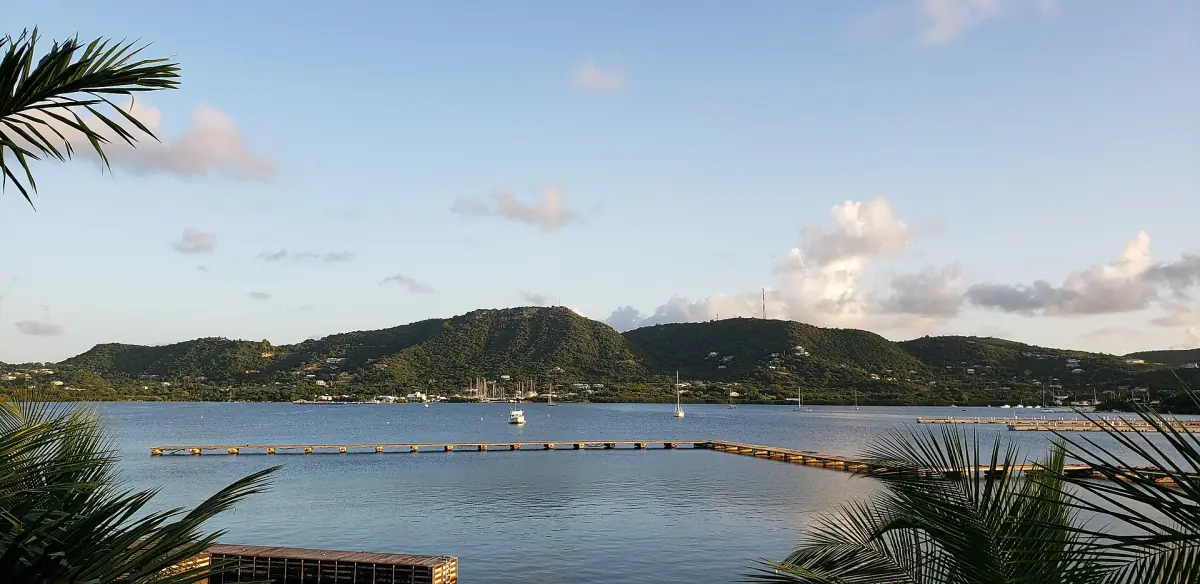
Antigua climate by month
Averages 1981–2010, measured at V. C. Bird International Airport.
| Month | Average high | Average low | Rainfall |
|---|---|---|---|
| January | 28.3 °C | 22.4 °C | 56.6 mm |
| February | 28.4 °C | 22.2 °C | 44.9 mm |
| March | 28.8 °C | 22.7 °C | 46.0 mm |
| April | 29.4 °C | 23.4 °C | 72.0 mm |
| May | 30.2 °C | 24.5 °C | 89.6 mm |
| June | 30.6 °C | 25.3 °C | 62.0 mm |
| July | 30.9 °C | 25.3 °C | 86.5 mm |
| August | 31.2 °C | 25.5 °C | 99.4 mm |
| September | 31.1 °C | 25.0 °C | 131.6 mm |
| October | 30.6 °C | 24.4 °C | 142.2 mm |
| November | 29.8 °C | 23.9 °C | 135.1 mm |
| December | 28.8 °C | 23.0 °C | 83.4 mm |
The rainfall column shows the average total for the month, not the number of rainy days. The reference period ended in 2010, so recent years can differ.
Best time to visit English Harbour
What the monthly averages suggest, month group by month group.
January to March
February (44.9 mm), March (46.0 mm) and January (56.6 mm) are the three driest months in the table. Daily highs stay between 28.3 and 28.8 °C, among the lowest of the year. Dry on average does not mean dry every day.
April
Rain rises to 72.0 mm and the average high to 29.4 °C. This is also the regatta month. The Classic Yacht Regatta is listed for 14 to 19 April 2027 at Nelson's Dockyard, and the organizer lists Antigua Sailing Week for 21 to 25 April 2027. One older calendar gives 21 to 26 April, so confirm the dates before you book.
Sailing Week guide →May to August
Highs reach 30.2 to 31.2 °C and monthly rain ranges from 62.0 mm in June to 99.4 mm in August. The hurricane season starts on 1 June.
September to November
These are the wettest months: 131.6 mm in September, 142.2 mm in October and 135.1 mm in November. September is also among the warmest months, with an average high of 31.1 °C. The hurricane season runs through 30 November.
December
Rain falls to 83.4 mm and the average high to 28.8 °C. The hurricane season has ended by then, but it is no promise of settled weather.
Boat trips and island tours from the south of Antigua
Catamaran trips, snorkeling, island tours and sunset outings, with current prices and availability.
Hurricane season in Antigua
1 June to 30 November.
Antigua Met lists the hurricane season as 1 June to 30 November. Antigua is not hurricane-free, and the sheltered setting of the old naval harbour does not make the area storm-proof. Storms can change course within days, so read the cancellation terms of a hotel, a car hire or a boat trip before you pay.
Check the forecast of the Antigua Met Service shortly before every sea trip and again on the morning of the trip. The same season applies across the Caribbean. For a neighbouring island, see the St. Thomas weather guide.
Boat and snorkel trips
Weather can cancel a boat trip. Operators set their own rules, so compare what each one offers if a trip is called off.
Snorkeling guide →Hikes
One local hiking operator runs the Pillars of Hercules section only if the weather permits. The Middle Ground trail has steeper parts and ropes in places. Bring sturdy shoes, sun and insect protection and a hat. Flip-flops are not suitable, according to a nature reserve operator.
Hiking guide →Beaches
Currents can be strong around Antigua and not every beach has lifeguards or warning flags. Calm weather does not remove that.
Safety guide →Plan around the weather
Pages that depend on the season.
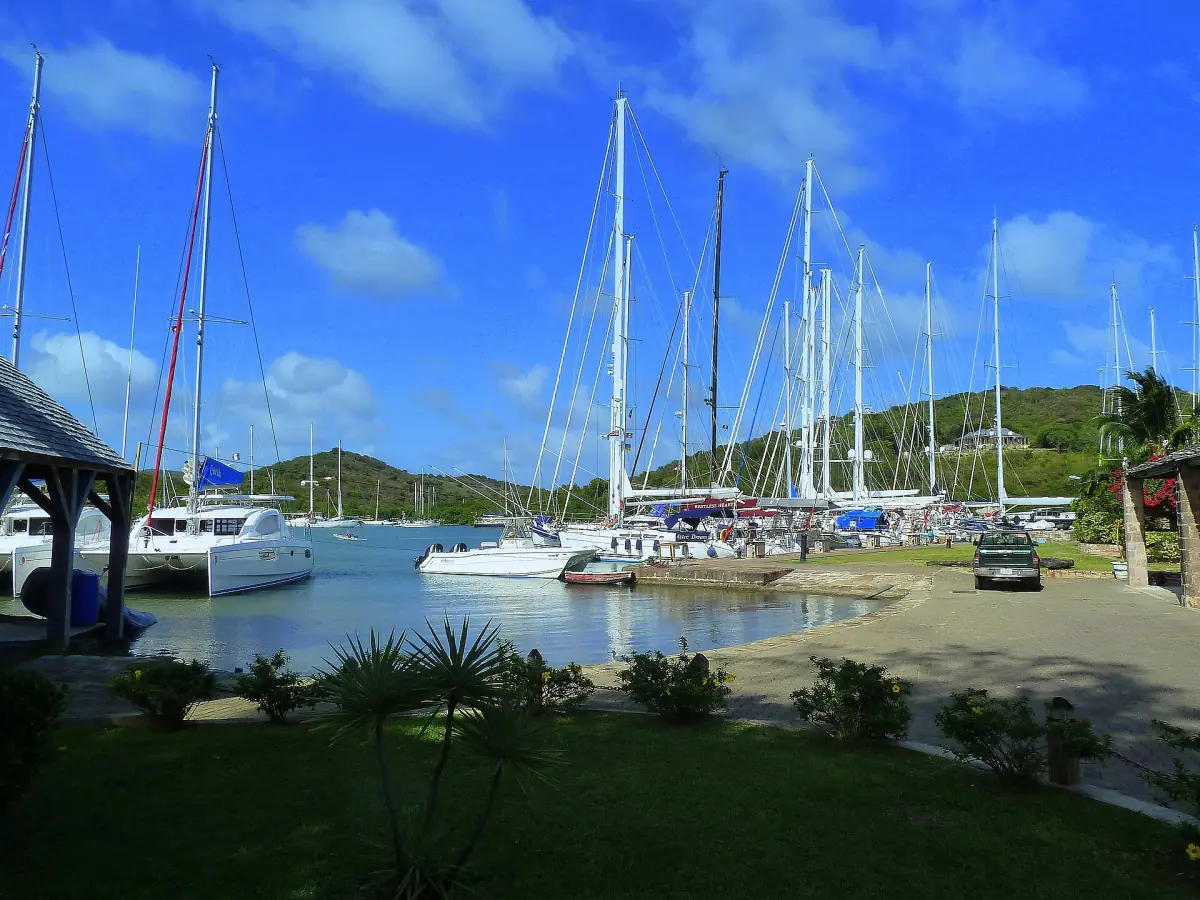
Antigua Sailing Week
April 2027 dates and what to expect around the harbours.
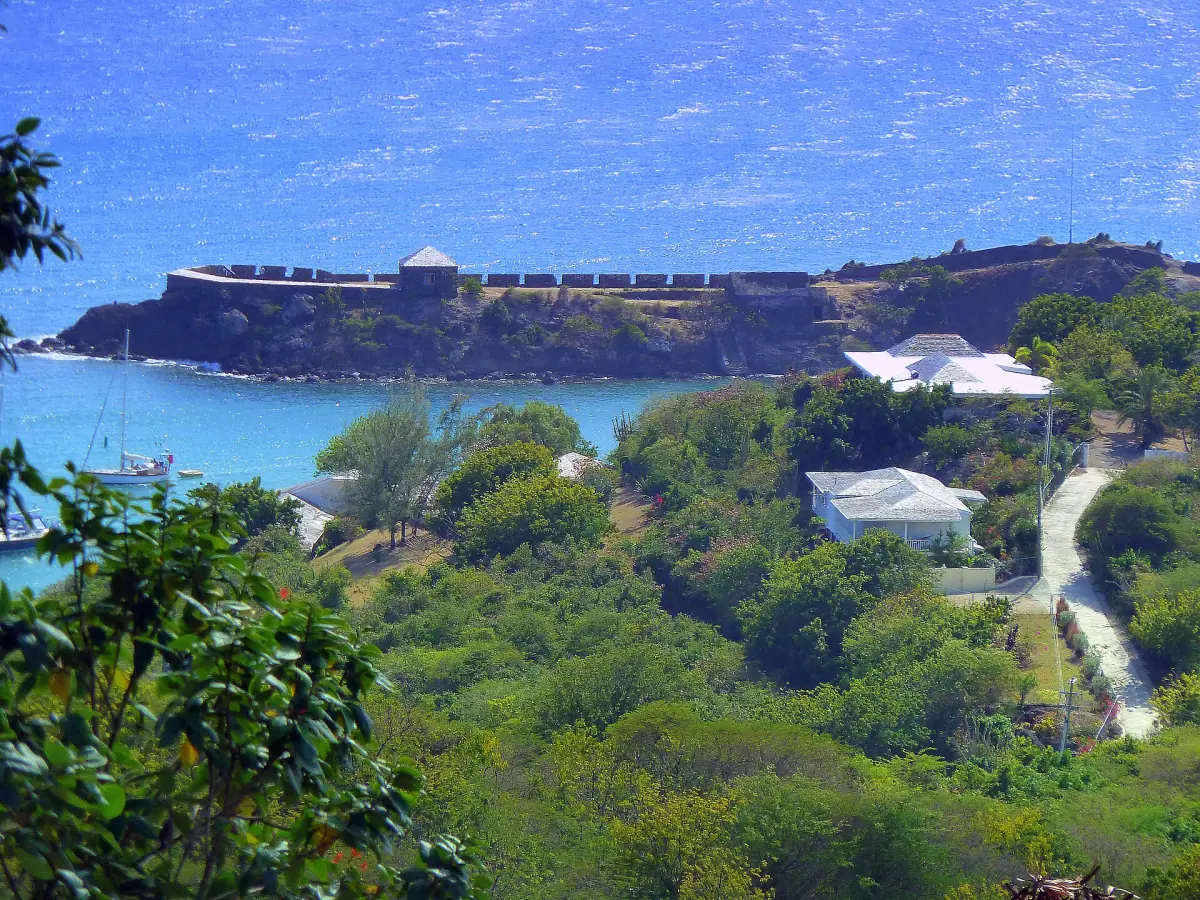
Hiking near English Harbour
Middle Ground, Pillars of Hercules and guided walks.
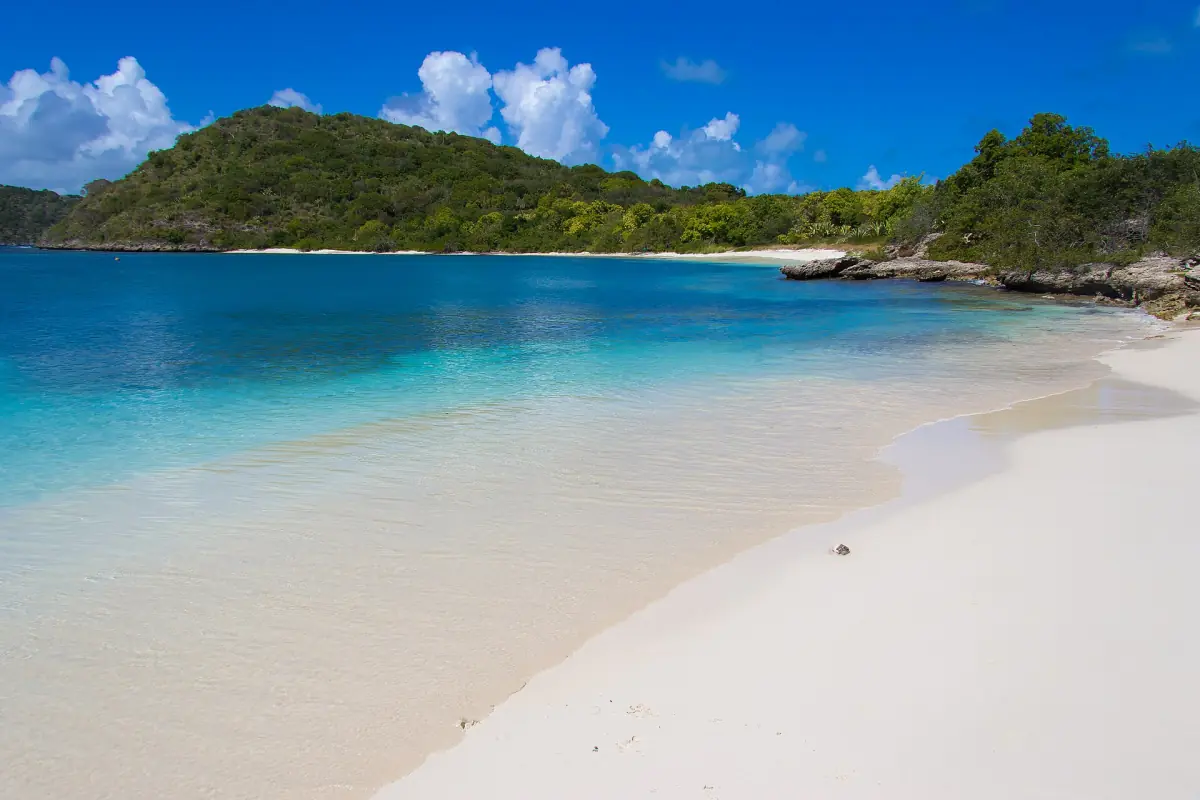
Antigua's beaches
South coast beaches and day trips compared.
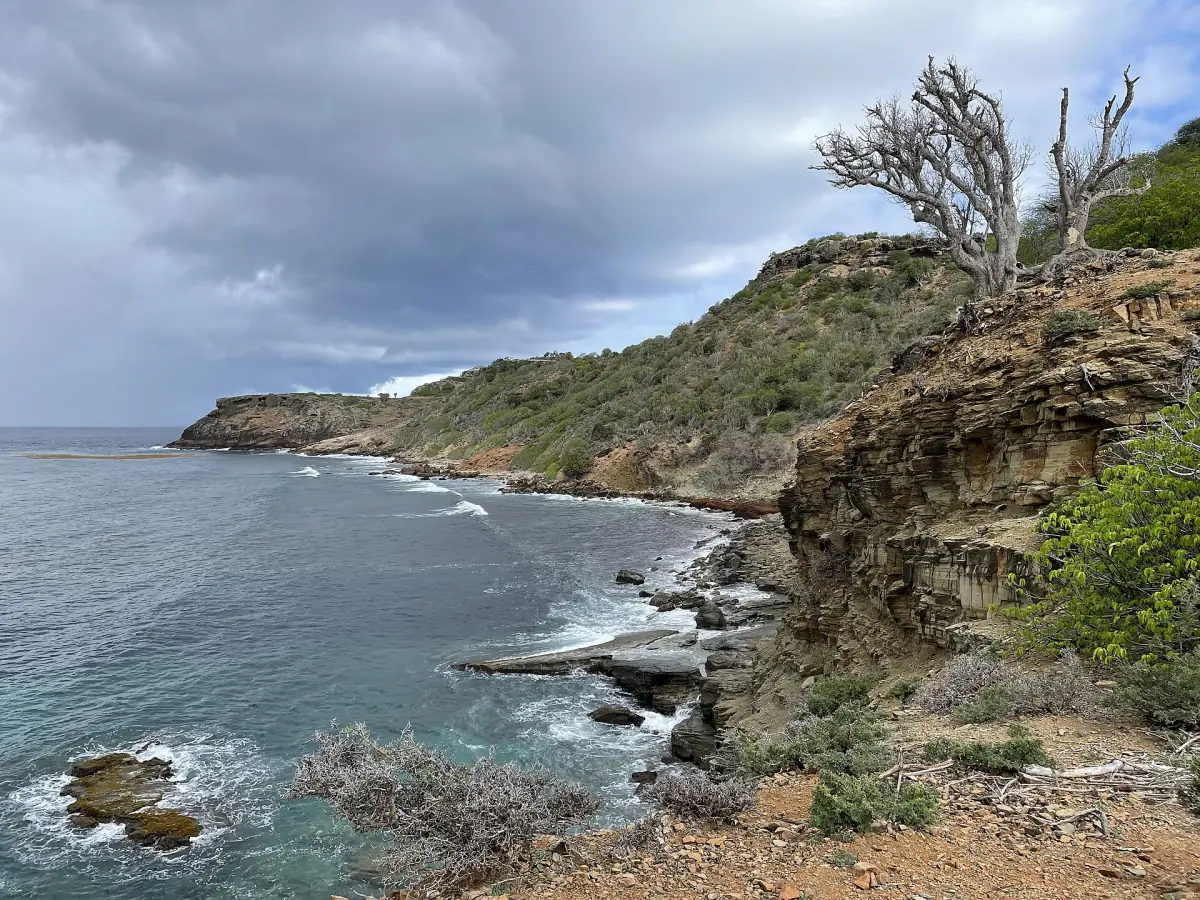
Is Antigua safe?
Travel advice with dates, currents and storms.
Antigua weather: frequently asked questions
What is the best time to visit English Harbour?
If you want the least rain, the averages point to February and March, with January close behind. April brings the regattas. The wettest months are September to November, which are also part of the hurricane season. There is no weather that is guaranteed on a given day.
Is Antigua hot all year?
Average daily highs range from 28.3 °C in January to 31.2 °C in August, and average lows from 22.2 to 25.5 °C. These are averages for 1981 to 2010 measured at the airport.
When is hurricane season in Antigua?
Antigua Met lists it as 1 June to 30 November. Treat the dates as a guide, not a guarantee. Watch the forecast and keep your booking terms flexible if you can.
Which month has the most rain?
October, with an average of 142.2 mm in the 1981 to 2010 data. November has 135.1 mm and September 131.6 mm.
Where do the numbers come from?
They are monthly averages from Antigua Met, measured at V. C. Bird International Airport for 1981 to 2010. English Harbour has no station of its own.
Where can I find the forecast for my trip?
Use the current forecast of the Antigua Met Service shortly before you travel and again before each boat trip or hike. This page shows long-term averages only.